Dubai Public Transport Guide: Metro, Taxi and Nol Card
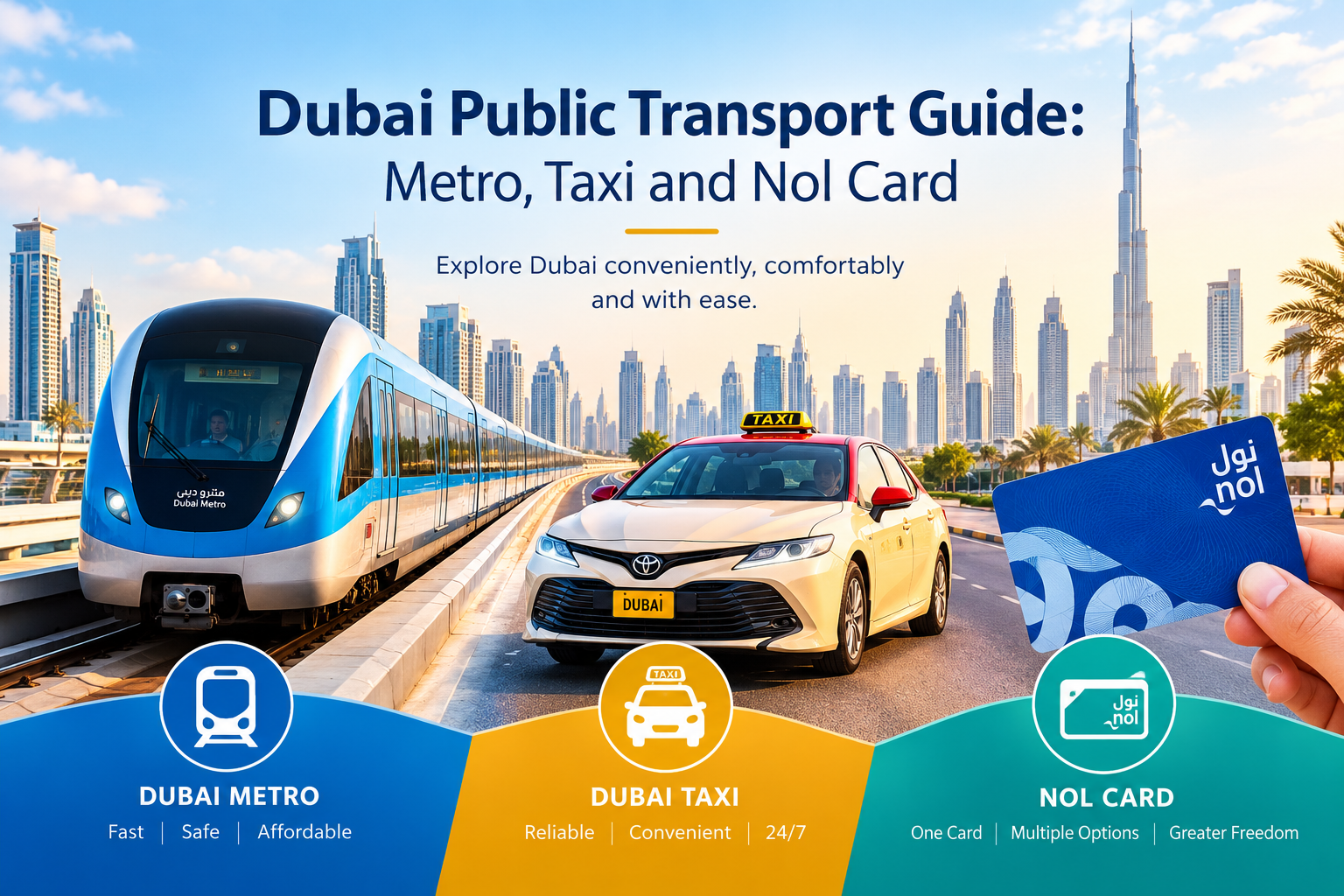
Planning a holiday in Dubai? Understanding the city’s public transport system can help you explore its famous attractions, shopping malls, beaches and historic neighbourhoods more comfortably. Whether you are visiting for the first time or returning for another holiday, Dubai offers several ways to get around, including the Dubai Metro, public buses, taxis, trams and traditional abra boats.
For many tourists, the most useful combination is the Dubai Metro for longer journeys, taxis for door-to-door travel, and a Nol card for convenient public transport payments.
In this guide, Imperial Getaways Tours explains how Dubai public transport works, which Nol card to choose, how much journeys cost, and how to select the best transport option for your itinerary.
1. Dubai Metro: An Easy Way to Explore the City
The Dubai Metro is one of the most convenient options for travelling between several of the city’s popular areas. It is fully automated, air-conditioned and connects Dubai International Airport with key commercial, residential and tourist locations.
The network has two main lines: the Red Line and the Green Line.
Red Line
The Red Line is particularly useful for tourists because it runs along major parts of Dubai and connects several popular destinations.
Key areas and attractions accessible from or near Red Line stations include:
- Dubai International Airport
- BurJuman and Union interchange areas
- Dubai Mall and Burj Khalifa, via the Burj Khalifa/Dubai Mall station
- Business Bay
- Mall of the Emirates
- Dubai Marina and Jebel Ali areas
Check the station name and walking distance before travelling, as some attractions require a connecting bus, tram or taxi.
Green Line
The Green Line is useful for exploring older parts of Dubai, particularly Deira and Bur Dubai.
Popular areas include:
- Al Fahidi Historical Neighbourhood
- Dubai Creek and Al Ghubaiba
- Gold Souk and Spice Souk areas
- Dubai Healthcare City
The Green and Red lines connect at interchange stations, making it easier to plan journeys across the city.
Dubai Metro timings
Metro operating hours can vary by day, station and service arrangements. Check the official Roads and Transport Authority (RTA) journey planner before travelling, especially on weekends, public holidays or late at night.
Travel tip: If your hotel is close to a Metro station, using the Metro for suitable journeys can help reduce transport expenses. However, check the walking distance to your destination, particularly during Dubai’s hotter months.
2. Dubai Taxi: Best for Door-to-Door Convenience
Taxis are widely used throughout Dubai and are particularly helpful when travelling with children, older family members, shopping bags or luggage.
Official RTA taxis are available at designated taxi ranks, shopping malls, hotels, tourist attractions and airport taxi areas. You can also book a taxi using supported apps and services.
When should you take a taxi?
A taxi may be the better choice when:
- Your hotel is far from a Metro station.
- You are travelling with family or a group.
- You want to reach an attraction directly without changing transport.
- You are travelling early in the morning or late at night.
- You have luggage or need to travel between several locations.
How much does a Dubai taxi cost?
Taxi fares depend on the distance travelled, applicable starting fare, booking method, time and any additional charges. Airport pickups may have a different starting fare from ordinary street pickups.
For budgeting, remember that a taxi journey will generally cost more than a Metro journey, particularly during longer trips or heavy traffic.
Use an official taxi or a reputable booking service, and check the fare details when booking. Traffic conditions can affect journey times, especially around major roads and busy tourist areas.
Travel tip: For attractions spread across different parts of Dubai, compare the time and cost of travelling by Metro with a direct taxi journey before deciding.
3. What Is a Nol Card?
A Nol card is a rechargeable smart card used to pay for many of Dubai’s public transport services. Instead of purchasing a separate ticket for each journey, you can add credit to your card and tap it when travelling.
Depending on the card and service, Nol can be used on:
- Dubai Metro
- Public buses
- Dubai Tram
- Dubai Ferry, abra and other participating marine transport services
- RTA taxis that accept Nol payments
- RTA paid parking
The Palm Monorail operates separately, so check its ticketing arrangements before travelling.
Which Nol card should tourists buy?
There are several Nol ticket and card options. For most visitors, the Silver Nol card is a practical choice for regular Metro, bus and tram journeys.
Silver Nol card: Suitable for tourists who plan to use public transport repeatedly during their stay.
Red Nol ticket: Useful for visitors who want a ticket for a limited number of journeys. Check which services and trip combinations are supported before purchasing.
Gold Nol card: Offers access to the designated Gold Class cabin on eligible Metro and tram services, where available, at a higher fare.
Blue Nol card: A personalised card with concessionary benefits for eligible users, such as certain students, senior citizens and People of Determination. Eligibility and discounts depend on the applicable RTA rules.
You can purchase or top up Nol products at participating Metro stations, ticket offices, vending machines and authorised outlets. Online and app-based options may also be available.
How much does the Nol card cost per journey?
The following are published standard adult fares for Metro, bus and tram travel. Your fare depends on the number of fare zones crossed.
| Journey | Silver Nol card | Red ticket |
|---|---|---|
| Within 1 zone | AED 3 | AED 4 |
| 2 adjacent zones | AED 5 | AED 6 |
| More than 2 zones | AED 7.50 | AED 8.50 |
Gold Class fares are higher. These are journey fares, not the purchase price of the card or ticket. Fares and conditions may change, so verify the current rates on the official RTA website before travelling.
How to use your Nol card
Using a Nol card is straightforward:
- Purchase the appropriate card or ticket.
- Add sufficient credit for your planned journeys.
- Tap your card on the reader when entering the Metro or boarding the relevant service.
- Tap out at the end of the journey where required.
- Check your remaining balance and top up when necessary.
Keep your card accessible throughout the journey. Each passenger should have their own valid travel card or ticket, subject to the applicable ticketing rules.
4. Dubai Public Buses: A Budget-Friendly Alternative
Dubai’s public bus network serves many neighbourhoods and connects with Metro stations. Buses can be helpful for reaching destinations that are not immediately beside a Metro station.
They are particularly useful for selected routes serving residential districts, shopping areas and local attractions.
However, bus journeys may take longer than the Metro or a taxi, depending on traffic and the number of stops.
Before boarding, check your route using the official RTA journey planner or another reliable navigation app. Remember that buses generally require a valid Nol card or an accepted ticketing option; do not assume you can pay the driver in cash.
5. Dubai Tram: Convenient for Marina and JBR
If you are staying around Dubai Marina, Jumeirah Beach Residence (JBR) or nearby waterfront areas, the Dubai Tram can be a useful transport option.
It connects with the Metro and serves several locations around the Marina and Al Sufouh corridor.
The tram is convenient for short journeys between nearby neighbourhoods, hotels and leisure areas. You can use a valid Nol card and should tap in and out according to the system’s rules.
Good to know: The Palm Monorail is a separate service that connects Gateway with attractions on Palm Jumeirah, including the Atlantis area. Its ticketing system is different from Nol.
6. Abra and Water Transport: Explore Dubai from the Creek
Dubai’s traditional abra boats offer a memorable way to cross Dubai Creek and experience the city’s heritage.
They are especially appealing when exploring the older neighbourhoods around Bur Dubai and Deira, including the souks and historic waterfront.
Other marine transport options include the Dubai Ferry and Water Taxi, which operate on designated routes and may offer scenic views of the city.
Check the operating route, departure point, timetable and ticket price before travelling. Services and schedules differ by route.
7. Which Transport Option Is Best for Tourists?
The right choice depends on where you are staying, which attractions you want to visit, your budget and the size of your group.
| Transport | Best for | Main advantage |
|---|---|---|
| Dubai Metro | Major city routes and selected attractions | Convenient and comparatively economical |
| RTA taxi | Families, luggage and direct transfers | Door-to-door convenience |
| Public bus | Areas served by local routes | Budget-friendly travel |
| Dubai Tram | Dubai Marina and JBR area | Convenient local connections |
| Abra | Dubai Creek and historic districts | Traditional local experience |
| Palm Monorail | Palm Jumeirah attractions | Dedicated island connection |
For solo travellers and couples, Metro journeys can be a practical way to explore connected areas. Families with young children may prefer taxis for some trips, particularly when attractions are spread across the city.
For a group visiting multiple attractions in one day, a pre-arranged private transfer may be worth comparing with separate taxi journeys.
8. How to Reach Popular Dubai Attractions
Here are some general transport suggestions for common tourist destinations:
Burj Khalifa and Dubai Mall: Use the Metro’s Burj Khalifa/Dubai Mall station, then follow the signed pedestrian route. Allow additional time for the walk.
Mall of the Emirates: The Red Line serves the Mall of the Emirates Metro station.
Dubai Marina and JBR: Use the Metro and tram network where convenient, or take a taxi for a direct trip to your hotel or destination.
Old Dubai, Gold Souk and Spice Souk: The Green Line and nearby Metro connections can help you reach the historic districts. An abra crossing can be added to your visit.
Dubai International Airport: The Metro serves airport stations on the Red Line, but check operating hours, luggage suitability and your hotel’s location before choosing it. A taxi or pre-booked transfer may be easier for late-night arrivals or travellers carrying several bags.
Desert safari camps: Most desert safari experiences involve a pickup arranged by the tour operator, often from a hotel or designated meeting point. The Metro does not take you directly to most desert safari camps.
9. Essential Dubai Public Transport Tips
Keep these practical points in mind during your trip:
- Check service timings: Operating hours can vary by service, day and public holiday.
- Carry enough Nol credit: Check your balance before starting a journey.
- Tap correctly: Follow the entry and exit rules for the service you are using.
- Follow cabin rules: Metro and tram services may have designated Gold Class and women-and-children areas. Follow the signs and official instructions.
- Respect public transport rules: Avoid eating or drinking where prohibited, and follow instructions displayed at stations and onboard vehicles.
- Plan around the weather: Walking between stations and attractions can be tiring in hot weather.
- Allow extra time: Traffic, queues, transfers and walking distances can affect your schedule.
- Check accessibility: If you need lifts, step-free access or an accessible vehicle, verify the arrangements for your chosen route.
For official updates, use the RTA website and the Visit Dubai transport guide.
10. Is Public Transport Enough for a Dubai Holiday?
Public transport is an excellent way to explore many parts of Dubai, but it may not be the most convenient option for every activity.
A balanced itinerary might combine the Metro for major city connections, taxis for nearby attractions that are difficult to reach on foot, and organised transfers for experiences such as desert safaris or selected Abu Dhabi excursions.
When choosing accommodation, consider the nearest Metro station as well as the distance to the attractions on your itinerary. A hotel with convenient transport connections can make your holiday easier to manage.
Plan Your Dubai Holiday with Imperial Getaways Tours
At Imperial Getaways Tours, we help travellers and travel partners plan Dubai holidays with suitable accommodation, sightseeing experiences and transport arrangements.
Whether you are visiting Dubai as a couple, with family or as part of a group, our team can help you organise a travel plan that suits your schedule and preferences.
Explore our Dubai holiday packages, sightseeing tours and transfer options to make your trip smoother.
Discover Dubai. The Imperial Way.
Visit imperialgetawaystours.com to enquire about your Dubai holiday.
Travel information note: Public transport fares, routes, operating hours and ticketing rules may change. Confirm current details with the RTA before travelling.